
Chesterfield County Warrant Searches
South Carolina has no public, statewide warrant lookup, and no official county sheriff roster was located. The main online starting point is the Chesterfield Public Index for case-linked court records. The county says it can search tickets, warrants, and most civil cases, but it directs municipal cases to the local city court.
Search your own name or use a case or citation number from a notice. If the matter could lead to detention, ask a South Carolina lawyer about the safest way to contact the issuing court. A docket entry can locate a file; the responsible court or agency answers current status questions.
- Search the Chesterfield Public Index by your own name, case number, court agency, and date range if known.
- Call the Clerk of Court for General Sessions or Common Pleas, or Central Magistrate for county traffic and lower-court records.
- For Cheraw, Chesterfield, Jefferson, McBee, or Pageland matters, contact that municipal court directly.
- Ask the Sheriff's Office how it handles an own-name law-enforcement inquiry; no public warrant list or warrant-specific online form was located.
- For an existing county record not found online, consider a targeted FOIA request. Federal records use federal court routes, not the county index.
Chesterfield Warrant Search Fields in Public Index
The official Trial Court Public Index guide lists controls for court, agency, case type, parties, actions, and dates. A case number is useful when available. Begin with broad court settings, then narrow by the agency or date that appears on the citation.
| Field / control | Type | Use | Notes |
|---|---|---|---|
| Court Type | Dropdown | Choose a court level | Defaults to all courts |
| Court Agency | Dropdown | Narrow to a known office | Defaults to all agencies |
| Case Number | Text | Locate a known filing | Use a notice or clerk number |
| Case Type / Subtype | Dropdown | Separate record categories | Options depend on the system |
| Last / First / Middle / Suffix | Text | Search your own name | Do not use as a people-finder |
| Party Type / Action Type | Dropdown | Narrow a docket | Choose a role or action if known |
| CDR / Indictment Number | Text | Trace circuit records | Use only when provided |
| Date Type / range | Dropdown and dates | Limit a time window | Pick beginning and ending dates |
| Name Search Option | Radio | Choose match style | Begins With or Contains |
The Judicial Branch user guide explains the control labels. The live site may change its interface.
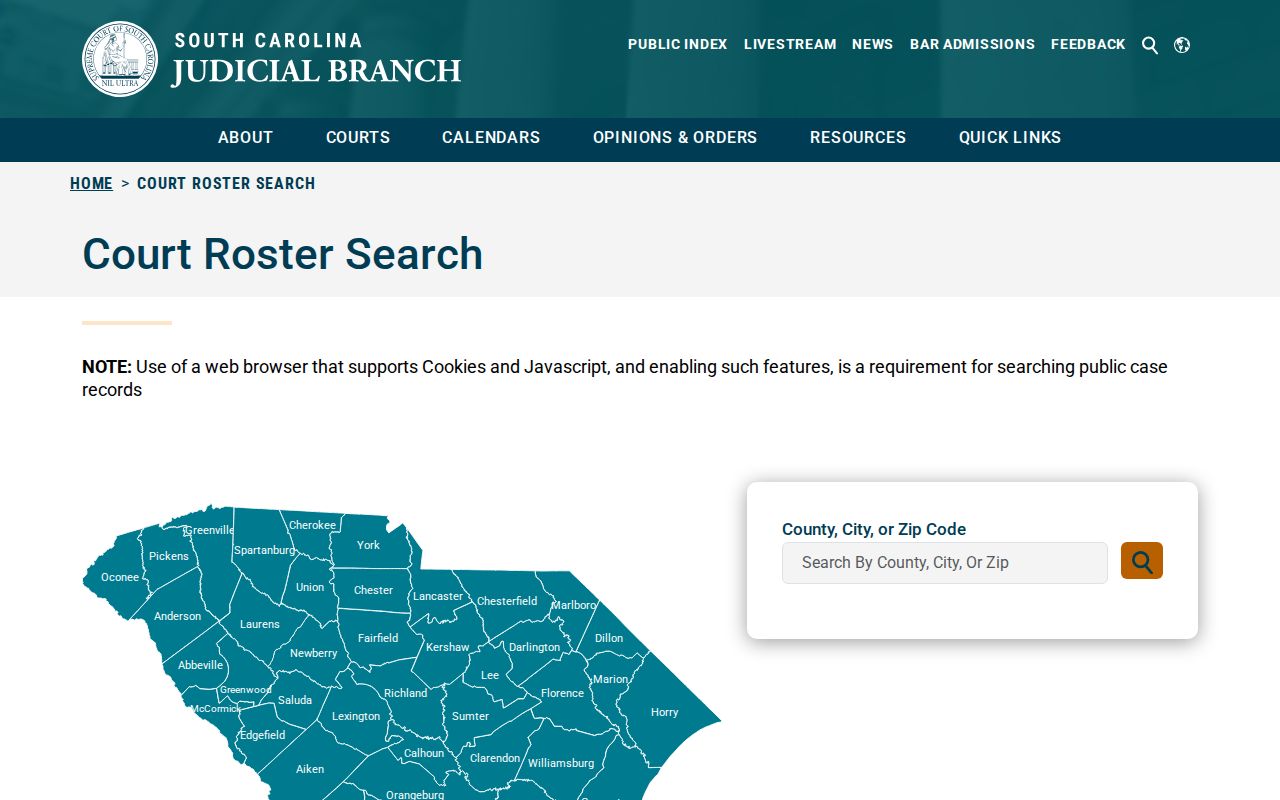
The roster identifies the court to contact; it does not return an active-warrant result for a person.
What a Warrant Search Asks For
The Public Index is a court search, not a sheriff active-warrant database. If a common name returns many cases, narrow by court agency, case type, action, and date. Use only information needed for your own case, and do not share sensitive identifiers in a public request or message.
| Field Label | Type | Required | Notes |
|---|---|---|---|
| Last Name | Text | No | Use Begins With first; Contains may help with spelling. |
| First / Middle / Suffix | Text | No | Use to narrow your own matching record. |
| Date of Birth | Not listed in the field guide | No | Do not assume it is an online control. |
| Case Number | Text | No | Best when a notice or clerk gave the number. |
| Court / Agency | Dropdowns | No | Defaults are broad; select only when known. |
| Case Type / Action | Dropdowns | No | May distinguish criminal, traffic, or docket actions. |
Begins With Is the Safer First Name Search
The Public Index guide offers “Begins With” and “Contains” name options. Start with Begins With and add a first name or case number if the result set is large. Use Contains only when spelling or name format makes an exact beginning match miss your own case.
The interface's Search button submits the selected fields; Reset Search Fields clears them. A returned name can belong to more than one case, so compare the court agency, filing date, and case type before calling. Avoid sending date of birth or Social Security details by ordinary email.
Open the Chesterfield Public Index and read its posted disclaimer before using the result.
Chesterfield County Warrant Search Results
A court result may show parties, date and time, bond, and docket actions or motions. The entry can lead to a warrant-related question, but only the issuing court can confirm whether a warrant was served, recalled, or remains open.
| Case / warrant number | Format varies by court Use the identifier shown on the official notice. |
|---|---|
| Party / court agency | Shows the case parties and court office associated with the record. |
| Charge / case type | Helps separate criminal, traffic, civil, and other records. |
| Bond / action | May show a bond entry or motion, not a live certificate. |
| Dates / status | Read the filed action and date, then ask the clerk what is current. |
Chesterfield Warrant Records Need Direct Confirmation
When a name or docket action appears, call the court listed on the file and ask whether the entry is current. For General Sessions or Common Pleas, call the Clerk at 843-623-2574. For county lower-court or traffic matters, call Central Magistrate at 843-623-9009 or Central Traffic Court at 843-623-3431. City matters require the local court.
The Sheriff's Office at 843-623-2101 can route an own-name law-enforcement question, but the research did not locate a public warrant-specific email or online lookup. Detention/Bond at 843-623-2261 handles custody logistics, not a general warrant database.
Do not rely on a third-party search result or a docket screenshot to decide whether a warrant remains active. Ask for the court's current action and how to obtain written or docket confirmation.
Chesterfield County Warrants: Who Holds What
The Clerk holds circuit records, Central Magistrate and Central Traffic hold county summary and ticket matters, and each municipal court holds city cases. The Sheriff is an agency route for law-enforcement questions. Federal matters use the District of South Carolina and PACER, separate from the county Public Index.
SLED CATCH is a criminal-history report and expressly excludes Wanted Persons. South Carolina has no single public statewide warrant search. A thorough own-name inquiry may therefore require a case index, an issuing clerk, a city court, the Sheriff's Office, or a federal source depending on the concern.
Chesterfield Warrant Search Is Not SLED CATCH
SLED CATCH accepts criminal-history search terms and may request a last name, first name, date of birth, and optional Social Security number. Its help page expressly says Wanted Persons are not included. It cannot answer whether a current warrant exists or whether an order was recalled.
The online name-based search was listed at $25, nonrefundable, plus convenience or service charges in the research review. Check the official live instructions for the current total before submitting a request. Do not pay for CATCH expecting a warrant check.
Read the SLED CATCH help page for its stated purpose and exclusions.
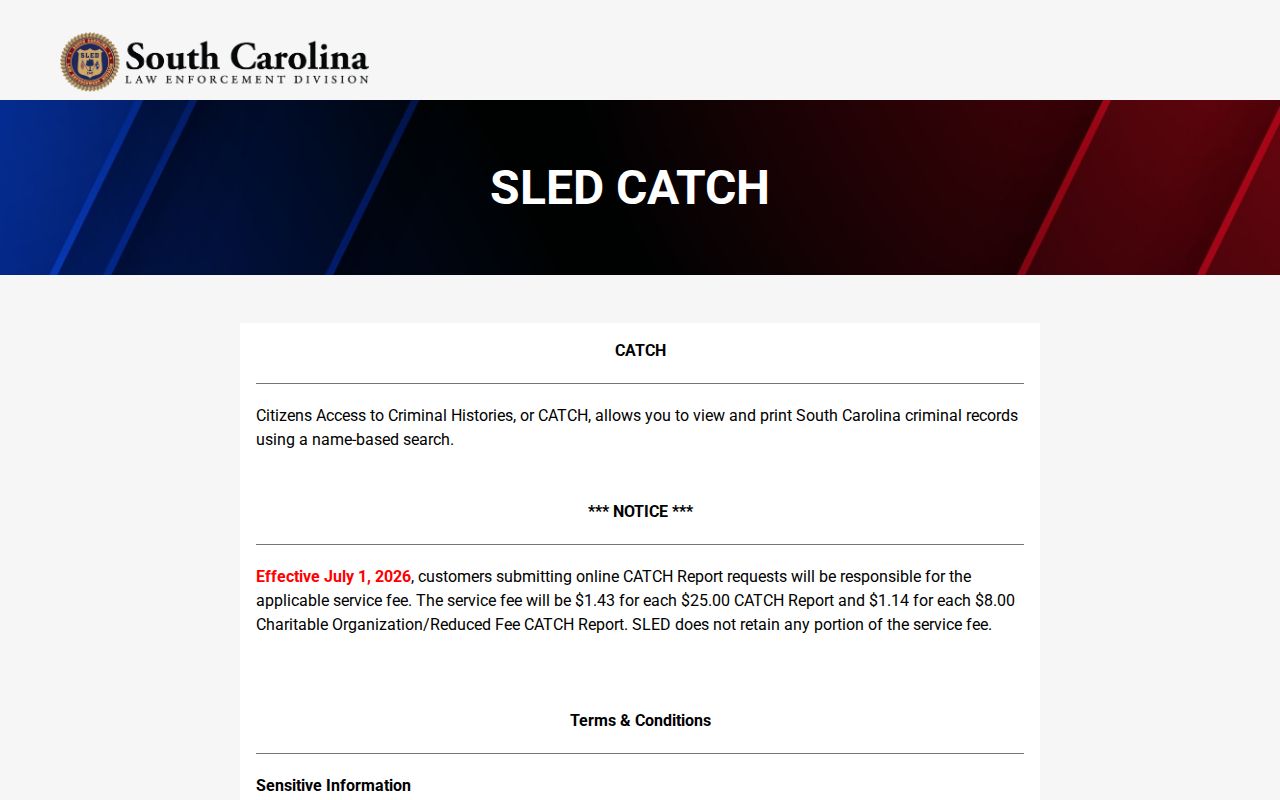
Use the relevant court or sheriff contact when the question is whether an order is outstanding.
Clerk Check Excludes Magistrates
The Clerk of Court lists an in-person criminal-record check for $10. The requester must bring photo ID, Social Security number, and date of birth. The service expressly excludes magistrate records, so it cannot settle a county traffic or magistrate-court warrant question.
Use the Clerk's official instructions to confirm current requirements before visiting. Ask which court record the check covers and contact the issuing court for current warrant status.
Which Warrants Stay Restricted
South Carolina FOIA covers public records held by public bodies, subject to exemptions. A signed and served arrest warrant may generally be public, but sealed cases, juveniles, investigative details, and protected identifiers can be withheld or redacted. A public search is not a complete inventory of law-enforcement records.
Key Rules:
S.C. Code § 30-4-40 lists exemptions that may require withholding or redaction.
S.C. Code § 17-1-40 addresses records tied to qualifying expunged charges.
A missing result may reflect municipal, federal, sealed, delayed, or unindexed records; confirm with the office that holds the case.