
How Arrest Warrants Work in Chesterfield County
The Fourth Judicial Circuit court directory identifies the county courthouse and circuit offices.
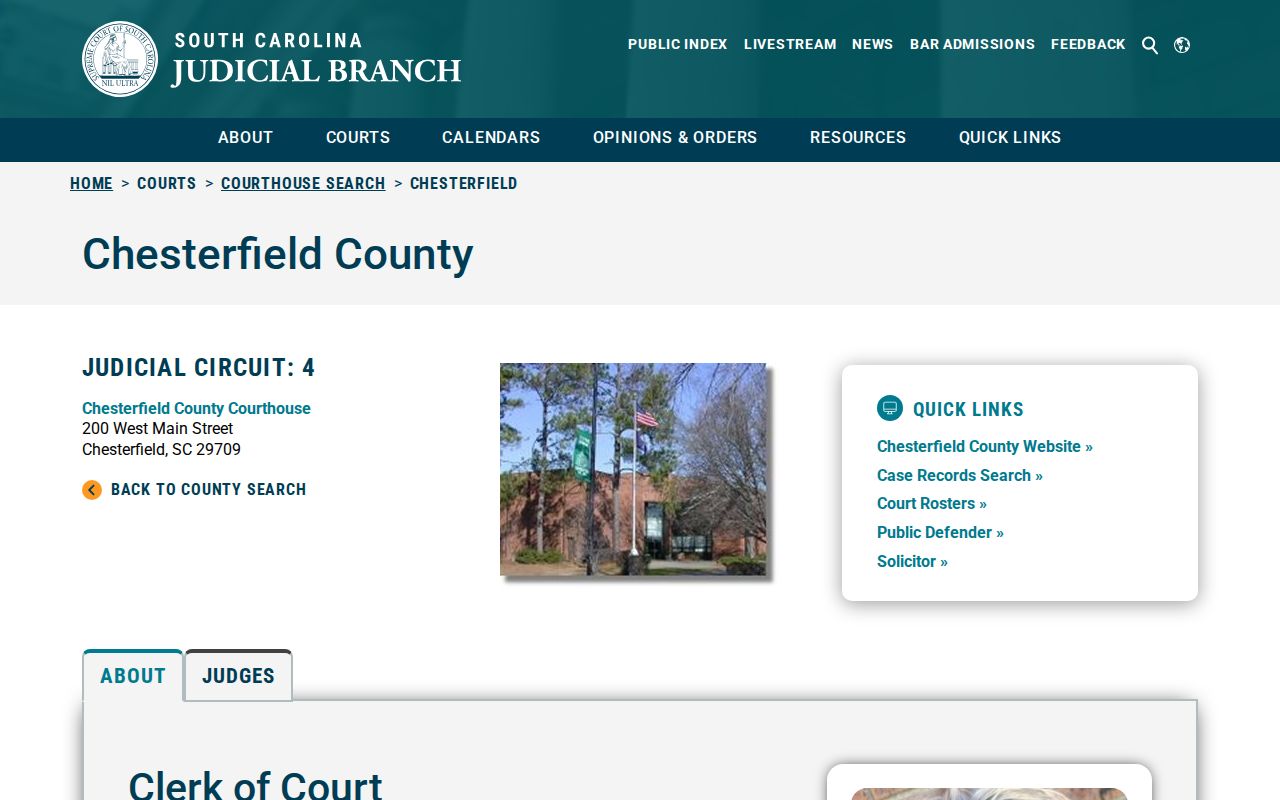
Chesterfield County arrest warrants begin with a judge's order, built on the required legal showing for an alleged offense. A call to the courthouse will not confirm whether one is still outstanding. Only the issuing court can do that. Under South Carolina Code § 22-5-110, a magistrate may issue the warrant, and the complaint route differs when a private citizen rather than law enforcement brings the request. The court reviews it first. The Chesterfield County Sheriff's Office or another authorized officer may then serve the paper and return it. Do not confuse this order with a bench warrant, which follows a missed court date. A search warrant is separate. The issuing court, the charge, the requesting agency, and the service return tell you which instrument you face, and a SLED news release can illustrate agency work without being a public case-search tool.
Chesterfield Arrest Warrants Use an Affidavit
Chesterfield County warrants run on the SCCA412 form family. It pairs a warrant with affidavit form SCCA412A. The warrant lists the county or municipality, the warrant number, the charge or code section, the requesting agency, the issuing judicial officer, the service area, and the return. The affidavit holds the sworn facts offered in support of probable cause. Those fields can carry names, birth dates, addresses, and driver's-license data. So public copies may come redacted. The Judicial Branch form index identifies both SCCA412 and SCCA412A. Use the current official Chesterfield County form to see what each field holds.
Arrest Warrants: What They Contain
Match the case number, the issuing court, and the offense first. Then call the right Chesterfield County clerk. An agency name shows who requested or will serve the warrant, not which clerk keeps the case file.
| Identifier | Local format not published Use the number on the court notice or clerk's record. |
|---|---|
| Named party | Shown on the official court document; do not copy identifying details into a public example. |
| Charge / offense | May include the statute, ordinance, offense code, and classification. |
| Issuing judge / court | Identifies the judicial officer and court that authorized the order. |
| Agency / affidavit | May name the requesting agency and include sworn probable-cause facts. |
| Bond / return | May show bond terms, service certification, and officer return. |
Rule 3 Tracks Chesterfield Arrest-Warrant Materials
South Carolina Rule 3 sets a records-handling clock for certain Chesterfield County arrest-warrant and bond materials. An authorized lower-court issuer sends the covered papers to the Clerk within 15 days from arrest or issuance. The Clerk forwards them within two business days. The Solicitor generally gets 90 days. Exceptions and extensions can stretch that window. These deadlines are processing duties, not promises. Rule 3 does not guarantee a warrant recall or a fixed resolution date for any Chesterfield County case. Ask the Clerk about General Sessions. Read South Carolina Rule 3 for the full text and its exceptions.
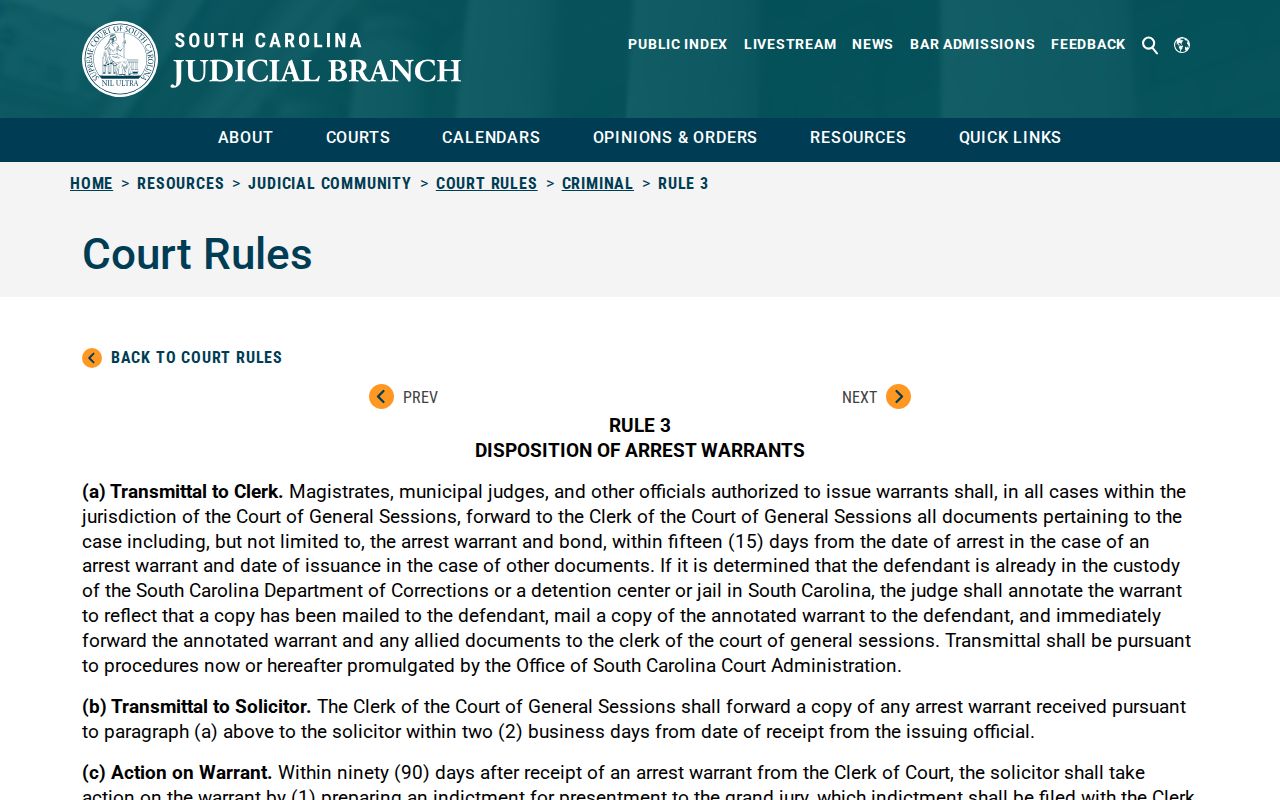
Rule 3's periods cover felony-case materials in Chesterfield County. They are not a promised warrant resolution date.
How Warrants Get Served in Chesterfield County
A Chesterfield County judge signs the warrant. Serving it is another job entirely. An officer then serves it and files the return. The SCCA412 forms carry service-certification and return fields, and SCCA523 directs its order to a lawful constable or officer. The Sheriff, a municipal police department, SLED, or another authorized agency may do the serving. The serving officer rarely keeps the docket. If an arrest happens, Chesterfield County bond logistics run through the Detention Center and Bond Court at 319 Goodale Road, 843-623-2261. Weekday and weekend hearing windows differ. Holidays vary too, so confirm the current schedule before treating a general booking reference as a promise about release.
Chesterfield County Service Names the Agency
The requesting-agency and ORI fields printed on a warrant can point you to the office connected with the case. Chesterfield County Sheriff's Office: 203 Watson Street, 843-623-2101. Chesterfield Police sits at 110 Main Street, 843-623-2419. Cheraw Police is at 258 Second Street, 843-537-7868. Pageland Police answers at 843-672-6437, and McBee Police at 843-910-0467. These are agency contacts, not separate warrant databases. Jefferson lists no stable police contact number, so a Jefferson municipal matter should start with its court at 843-658-7600. Confirm directory details before visiting or mailing anything to a Chesterfield County office.
Chesterfield County Sheriff's Office
203 Watson Street, Chesterfield, SC 29709
843-623-2101
For court records rather than service operations, use the Chesterfield courthouse and Clerk route.
Arrest Warrants, Summonses, and Bench Warrants
Not every Chesterfield County case starts with an arrest. South Carolina law allows a summons in some summary or municipal matters instead. Miss it, and the court can take further action, including a bench warrant. A search warrant is a separate instrument.
| Feature | Arrest Warrant | Summons | Bench Warrant |
|---|---|---|---|
| What it orders | Custody under the signed order | Appearance at a stated time | Bring the person before the court |
| Basis | Probable-cause process | Notice to appear under applicable procedure | Missed appearance or bond violation |
| Record route | Issuing court and named agency | Court that issued the summons | Court handling the pending case |
| Next step | Confirm status and seek counsel | Attend on the stated date | Ask issuing court about recall or a new date |
Chesterfield Arrest-Warrant Access Has Limits
When does a warrant become public? South Carolina's Attorney General has answered that question in an opinion. The general rule: after signature and service. Exceptions exist for expungement, sealing, and protected material. Section 22-5-210 gives the arrested person a copy. That means a copy of the warrant and affidavit, not every field posted online. Juvenile, victim, witness, Social Security, driver's-license, medical, and investigative details may be shielded. Rule 3 also governs how covered materials move between lower courts, the Clerk, and the Solicitor. Ask the Chesterfield County Clerk for a public copy or a redacted record, and for the reason behind any withholding. The Attorney General opinion lays out the statutes and court rules that apply to a Chesterfield County record.
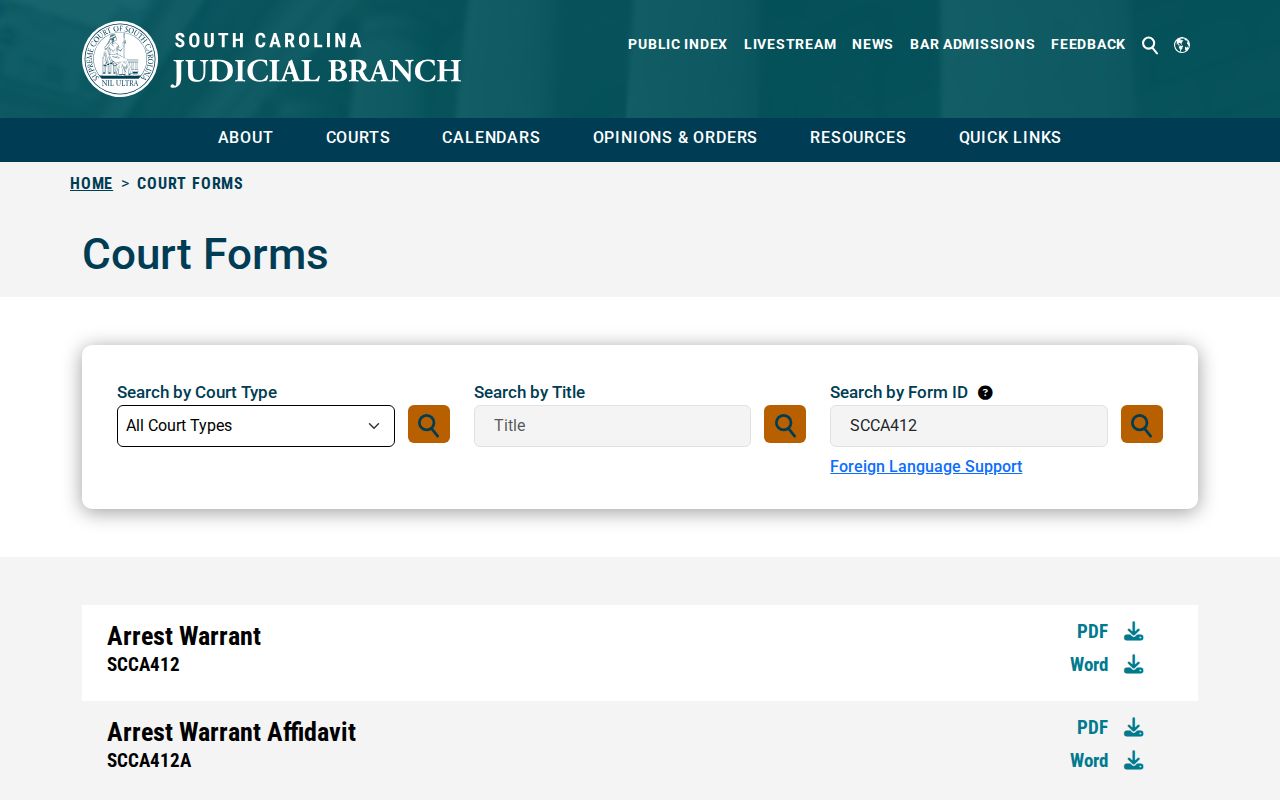
A form library can show how Chesterfield County paperwork is laid out, but only the issuing court's own file controls access to an individual order.
Handling an Arrest Warrant in Your Name
Start with the issuing court and the agency named on the warrant record. Ask the clerk some plain questions. Is the docket current? Which bond details are public? The next question is which judge should receive your motion. Chesterfield County callers whose only route is the Sheriff's Office can dial 843-623-2101. Ask how an own-name warrant confirmation works. A news release is not a case-status answer. Talk with a South Carolina attorney before any voluntary appearance when custody is a concern, since the court may direct a motion to recall or quash, a new date, a surrender, or a bond hearing. Payment alone, a walk-in recall, or a guaranteed release are things no official Chesterfield County source promises.
Important: Ask counsel and the issuing court about status, appearance, and bond before you go; county sources do not promise that a walk-in avoids booking.
Federal Process Uses a Different Court
A federal arrest warrant comes from the federal court system. An arrest in Chesterfield County does not make it a county warrant. Federal dockets live elsewhere. Search PACER and the United States District Court for the District of South Carolina. The county Public Index skips federal files. For a federal case, find the case number. Confirm the docket with the court or with counsel. A county search with no match does not prove that no federal order exists, and the federal court site explains its own case access routes.
A federal docket result answers a federal case question, not the standing of a Chesterfield County or town-court warrant.